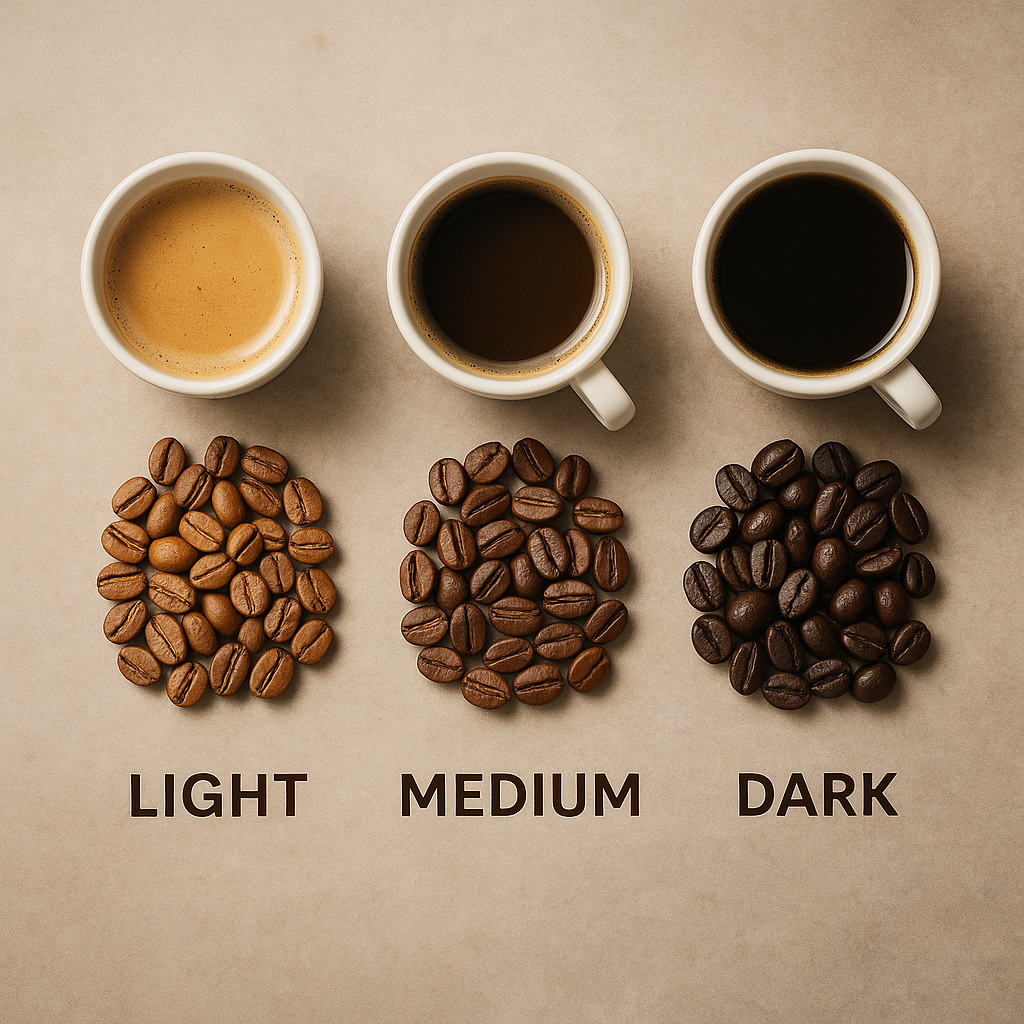
Coffee enthusiasts often hear terms like light roast, medium roast, and dark roast—but many still wonder what they truly mean and how they affect the taste of a cup of coffee. Understanding roast levels is essential for choosing the right beans for your brewing method and personal taste preferences. And that brings us to the key question: What Are Light, Medium, and Dark Roasts? Knowing the answer can help you unlock new flavors and elevate your daily coffee experience.
Understanding Roast Levels: What Does “Roast Level” Really Mean?
Roast level describes how long and at what temperature coffee beans are heated after processing. At first, coffee beans start out as green, dense seeds with almost no aroma. As the roasting process begins, heat gradually transforms them into brown, fragrant beans rich with complex flavors. The longer they roast, the darker, oilier, and more intense they become.
As a result, roast level influences nearly every aspect of your coffee—from flavor notes like fruity, floral, chocolatey, or smoky, to acidity, aroma, and body. It even affects how strong the caffeine may feel. Because roasting significantly alters the beans’ chemical structure, each roast level ultimately develops its own unique sensory profile.
What Is Light Roast Coffee?
Light roast coffee is roasted for a shorter amount of time, which helps preserve the natural flavor characteristics of the coffee bean. These coffees often highlight origin-specific qualities—meaning you can taste flavors from the region where the beans were grown, such as citrus brightness from Ethiopia or berry sweetness from Kenya.
What Does Light Roast Taste Like?
Light roasts are typically bright, vibrant, and aromatic. They offer high acidity, delicate sweetness, and complex flavor notes. Many light roasts tend to taste fruity, floral, or tea-like, with clean and crisp finishes.
Flavor profile examples: Citrus, berry, apple, jasmine, honey
Bean color: Light brown with a dry surface
Best brewing methods: Pour-over, Chemex, Aeropress
Ideal for: Coffee lovers who enjoy nuanced, origin-forward flavors
Caffeine level: Slightly higher than dark roasts (by volume)
Light roast coffee is perfect for anyone who wants a lively, refreshing cup that celebrates the natural character of the bean.
What Is Medium Roast Coffee?
Medium roast coffee is often considered the most balanced option. It sits between the brightness of light roast and the boldness of dark roast. The beans retain some origin flavors, but roasting adds sweetness, body, and a pleasant richness.
Why Is Medium Roast So Popular?
Medium roasts offer a harmony of acidity, sweetness, and roast character. Many people enjoy medium roast coffee because it feels smooth, approachable, and versatile across brewing methods.
Flavor profile examples: Caramel, milk chocolate, nuts, mild fruit
Bean color: Medium brown, sometimes slightly shiny
Best brewing methods: Drip coffee, French press, espresso
Ideal for: People who enjoy a balanced, sweet, and rounded cup
Caffeine level: Slightly less than light roast, slightly more than dark roast
Medium roast is a great everyday coffee because it satisfies a wide range of palates without being too acidic or too bold.
What Is Dark Roast Coffee?
Dark roast coffee is roasted the longest and at the highest temperatures, which creates deep, intense flavors. During this extended roasting, much of the bean’s original character is replaced by flavors developed through caramelization and carbonization.
Why Does Dark Roast Taste So Bold?
Dark roasts taste strong because prolonged roasting brings out smoky, bittersweet, and roasted notes. These coffees have fuller body, low acidity, and a rich, intense presence.
Flavor profile examples: Dark chocolate, molasses, smoky notes, roasted nuts
Bean color: Dark brown to nearly black, oily surface
Best brewing methods: Espresso, Moka pot, drip, cold brew
Ideal for: People who prefer strong, bold, low-acidity coffee
Caffeine level: Slightly lower than light roasts (difference minimal)
If you love robust, full-bodied coffee with noticeable roast flavor, dark roast is the perfect fit.
Does Roast Level Change the Caffeine Content?
One of the biggest misconceptions about coffee is that dark roast contains more caffeine. In reality, light roasts tend to have slightly more caffeine by volume because their beans remain denser. Dark-roasted beans expand and lose density as they roast longer.
However, when measured by weight, the caffeine difference between light, medium, and dark roasts is minimal. Most drinkers will not notice any significant change in caffeine strength.
How to Choose the Right Roast for Your Taste
Choosing between light, medium, and dark roasts depends on what you enjoy most and how you prepare your coffee.
Choose Light Roast If You:
- Like bright acidity and complex flavors
- Want to taste the bean’s origin
- Enjoy fruity, floral, or tea-like notes
Choose Medium Roast If You:
- Prefer balanced acidity and sweetness
- Like chocolatey, nutty, or caramel notes
- Want a versatile coffee that works with any brew method
Choose Dark Roast If You:
- Enjoy bold, rich, intense flavor
- Prefer low acidity
- Love espresso or strong brews
Final Thoughts: Explore the World of Roast Levels
Roast level plays one of the biggest roles in shaping coffee flavor. Whether you’re new to specialty coffee or a seasoned enthusiast looking to refine your palate, understanding how light, medium, and dark roasts differ can help you choose the perfect cup. Experiment with different roasts—even from the same region—to discover how roasting transforms flavor. You may be surprised by how much variety a single coffee bean can offer depending on how it’s roasted.