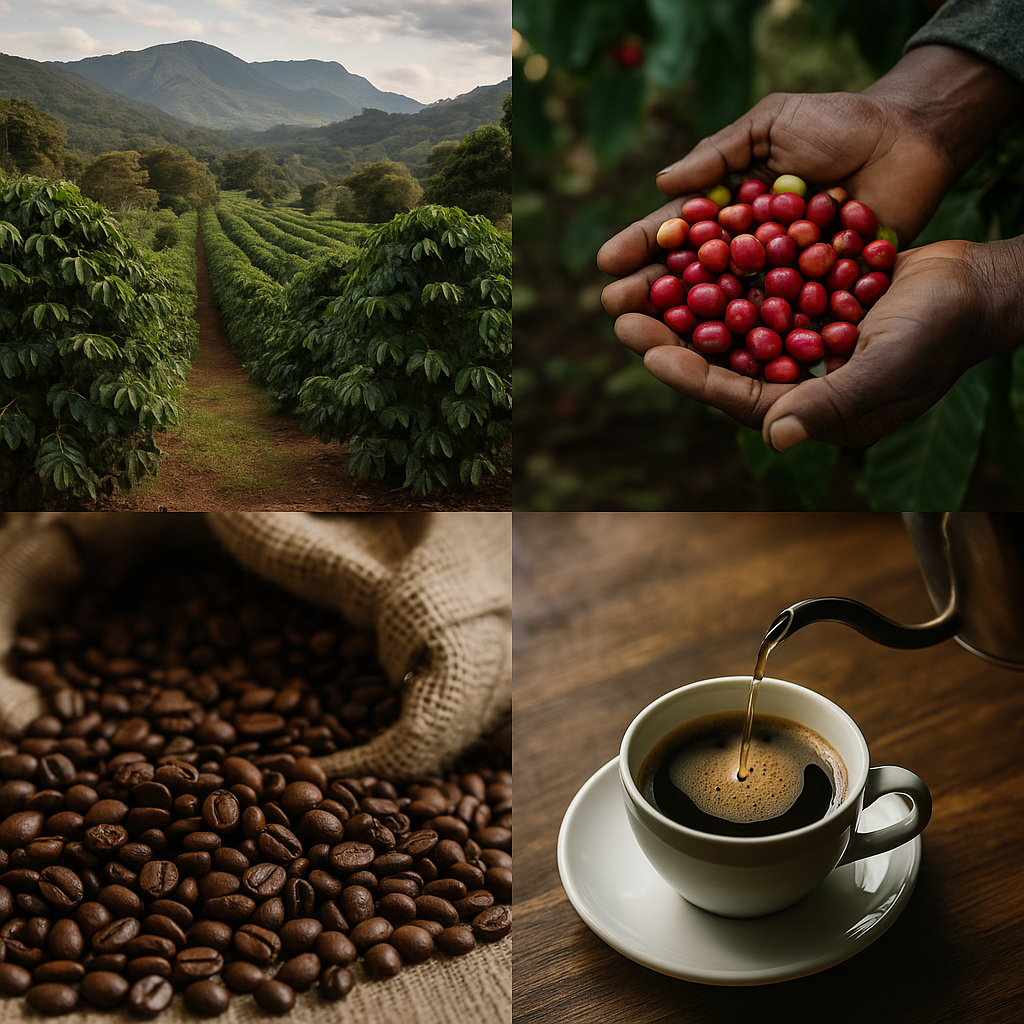
Have you ever stopped to think about how the rich aroma and comforting warmth of your morning coffee came to be? From misty mountain farms to your cozy kitchen, the journey of coffee from bean to cup is a fascinating process shaped by nature, craftsmanship, and global trade. Every sip represents a world of effort—from cultivation and harvesting to roasting and brewing. Understanding this journey not only deepens your appreciation for coffee but also connects you to the people and places behind your favorite drink.
Where Coffee’s Journey Begins: The Farm
The story of coffee begins on tropical farms located along the “coffee belt,” an area between the Tropics of Cancer and Capricorn. Here, the coffee tree thrives in high altitudes, rich volcanic soil, and consistent rainfall. The two main species cultivated are Arabica and Robusta—each offering distinct flavors and caffeine levels.
- Arabica: prized for its smooth acidity and complex aroma; makes up about 70% of the world’s coffee production.
- Robusta: bolder, higher in caffeine, and more resistant to pests—often used in espresso blends and instant coffee.
Countries like Brazil, Colombia, Ethiopia, Vietnam, and Kenya produce some of the world’s finest beans, each shaped by unique climates and landscapes. It takes roughly three to four years for a young coffee tree to produce its first harvest, and a single tree yields only about one to two pounds of roasted coffee per year.
The Art of Harvesting: Timing Is Everything
Coffee cherries do not ripen simultaneously, meaning harvesters must selectively pick only the ripest fruit. This method—common in specialty coffee farms—ensures the best quality but requires time and skill. In contrast, large-scale farms sometimes rely on mechanical harvesting, which is faster but less precise.
Once cherries are harvested, they must be processed immediately to preserve freshness and prevent fermentation.
Processing Coffee: From Cherry to Bean
Processing is the critical step that transforms a fresh coffee cherry into a green bean ready for export. There are three main methods used worldwide:
- Washed (Wet) Process – Cherries are pulped, fermented, and washed, producing a clean, bright flavor with higher acidity.
- Natural (Dry) Process – Whole cherries are sun-dried before the beans are extracted, creating sweet, fruity, and full-bodied flavors.
- Honey Process – A hybrid technique where some fruit mucilage remains during drying, resulting in a balanced, complex cup.
After processing, beans are dried to about 10–12% moisture—either on raised beds or patios—and then rested to stabilize before export.
Milling and Grading: Refining the Bean
Once dry, beans undergo hulling to remove the outer parchment layer, followed by grading and sorting based on size, density, and defects. Specialty-grade beans must pass strict quality standards, including taste evaluation (known as cupping) by certified professionals.
The best beans are bagged—often in jute or GrainPro sacks—to preserve quality before being shipped across the globe.
From Origin to Destination: The Global Coffee Trade
Coffee is the second most traded commodity in the world, after oil. Green coffee travels thousands of miles by sea, moving from producing nations to roasteries in North America, Europe, and Asia. For countries like Brazil, coffee exports are a vital part of the economy, supporting millions of farmers and workers.
At this stage, the coffee beans are still raw and flavorless. Only through roasting will they develop the taste we recognize and love.
Roasting Coffee: Science and Craft
Roasting transforms green beans into the rich, aromatic coffee we drink. As beans heat up, they undergo chemical reactions—like the Maillard reaction and caramelization—that create the flavors, aromas, and colors unique to each roast profile.
Roasters adjust time, temperature, and airflow depending on the coffee’s origin and desired result:
- Light roasts preserve fruity, floral, and origin-specific notes.
- Medium roasts balance acidity and sweetness.
- Dark roasts bring out chocolatey, caramelized, and smoky tones.
Roasting is both art and science—requiring precision and intuition to achieve consistent quality.
Packaging: Protecting Freshness
Once roasted, coffee starts losing freshness immediately as it reacts with air. That’s why specialty coffee is sealed in valve bags, which allow CO₂ to escape while keeping oxygen out. Look for roast dates on packaging—a mark of freshness and transparency.
To enjoy peak flavor, it’s best to use coffee within two to four weeks of roasting. Store it in an airtight container, away from light and moisture.
Grinding and Brewing: The Final Transformation
When the coffee finally reaches your home, the last step of its journey begins—brewing. The grind size, water quality, and method you choose all influence the final taste.
Here are some popular brewing methods:
- Pour-over (V60, Chemex) – brings clarity and brightness.
- French Press – produces a full-bodied cup with rich texture.
- Espresso – delivers a concentrated, complex flavor.
- Cold Brew – offers a smooth, refreshing, low-acid profile.
- Moka Pot – creates strong, stovetop coffee beloved in many homes.
Experimenting with ratios and brewing techniques helps you uncover new dimensions of your favorite coffee.
Final Thoughts: Appreciating Coffee’s Global Journey
The journey of coffee from bean to cup is a story of nature, craftsmanship, and connection. Each stage—farming, harvesting, processing, roasting, and brewing—adds value and character to the drink that fuels our mornings and brings people together.
Next time you enjoy a cup, take a moment to appreciate the thousands of hands and miles behind it. Every sip represents a legacy of dedication, tradition, and passion—a global effort condensed into your daily ritual.