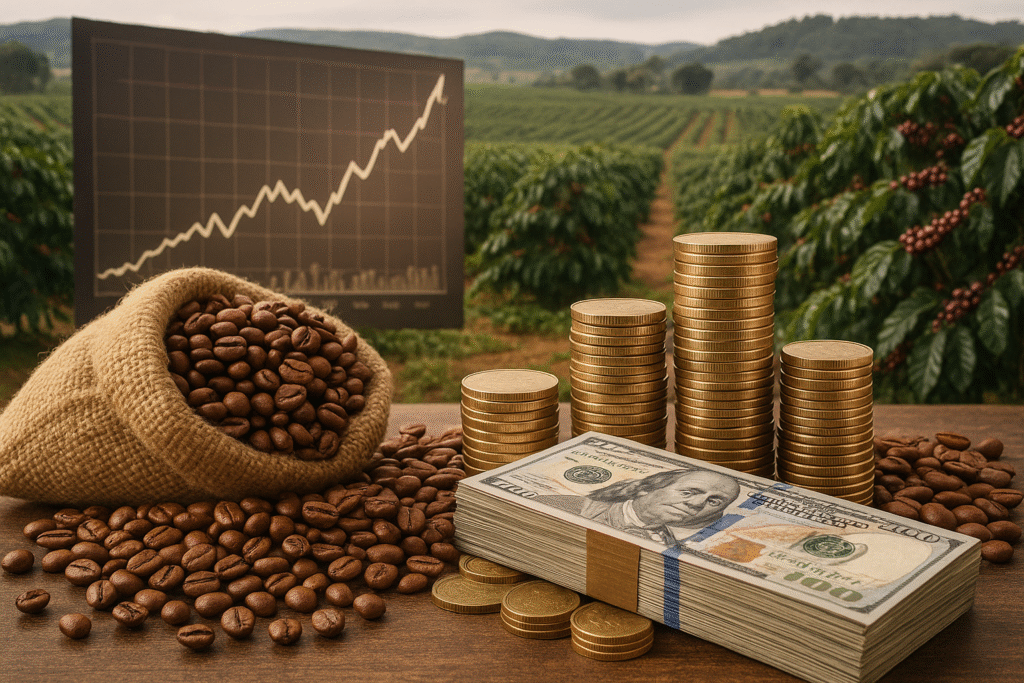
Brewing and consuming coffee has evolved into far more than a daily habit; it now stands as a crucial global driver shaping industries, cultures, and economies worldwide. From the very beginning, understanding how coffee influences markets reveals not only its cultural relevance but also its strength as a bold economic force, turning each cup into a moment of bold global impact.
The Economic Weight of Coffee in Global Trade
Understanding the economic relevance of coffee reveals why it remains one of the most essential agricultural commodities on the planet. Today, its position as the second most traded commodity after oil demonstrates how deeply the world relies on it. Moreover, more than 125 million people depend on coffee farming, processing, transportation, and distribution, which reinforces its status as a driver of socio-economic development in many developing nations. Even so, the market continues to evolve as new consumption patterns and specialty trends reshape its global impact, generating over 100 billion dollars annually.
The World’s Leading Coffee Producers
Recognizing where coffee is grown helps illustrate its importance in shaping economies. Brazil remains the world’s largest exporter, followed closely by Vietnam, Colombia, and Ethiopia—four countries whose identities, histories, and agricultural industries are inseparably tied to this commodity. Additionally, each of these nations relies on coffee as a major contributor to GDP, employment, and rural development. Furthermore, climate, altitude, and tradition influence their production methods, resulting in coffees that differ in flavor, aroma, and global demand, all of which contribute to bold market strength.
Brazil: The Global Coffee Powerhouse
Brazil dominates global coffee output due to its favorable climate, advanced agricultural techniques, and vast growing regions. Its diversified production of Arabica and Robusta fuels international markets and stabilizes global supply, making its role indispensable.
Vietnam, Colombia and Ethiopia
Vietnam’s efficiency in producing Robusta reshaped the instant coffee market, while Colombia remains celebrated for high-quality Arabica. Ethiopia, considered coffee’s birthplace, exports beans with unique profiles cherished in specialty markets.
Social and Economic Impact on Producing Regions
Exploring the influence of coffee on local communities reveals how deeply rooted it is in rural economies. It supports millions of families by generating direct and indirect employment—from planting and harvesting to roasting and exporting. Additionally, the crop encourages investments in infrastructure, electrification, and education across isolated regions. Still, this dependence creates vulnerabilities as communities face price volatility and climatic instability, reinforcing the need for bold sustainable progress.
Coffee in the Global Financial Market
Analyzing how coffee interacts with financial markets provides insight into its role as a volatile commodity. Prices fluctuate based on weather events, disease outbreaks such as leaf rust, political instability, and exchange rate variations. Because of this unpredictability, futures contracts on exchanges like ICE in New York and the London Futures Market help stabilize incomes for producers and costs for buyers. Consequently, coffee becomes both an agricultural product and a sophisticated financial asset.
The Rise of the Specialty Coffee Market
Demand for premium and specialty coffee continues to grow as consumers seek unique flavors, traceability, and ethical sourcing. This trend benefits small producers who focus on quality rather than volume, allowing them to earn better prices and gain international recognition. Moreover, certifications such as Fair Trade, Organic, and Rainforest Alliance encourage improved practices, environmental stewardship, and transparency across the supply chain. As a result, specialty coffee strengthens niche markets and enhances global appreciation for craftsmanship, adding another layer to its bold economic influence.
Innovation and Industry Trends
Examining recent innovations shows how the coffee industry adapts to global shifts. Single-origin products highlight terroir and authenticity, while brewing methods like Aeropress, Chemex, and Cold Brew appeal to younger consumers. Furthermore, sustainability initiatives—reducing water usage, implementing shade-grown systems, and adopting eco-friendly processing—have become essential in modern production. Even more, technological advances such as AI-driven monitoring and predictive analytics are transforming plantation management and maximizing yield efficiency.
Future Challenges for the Coffee Sector
Addressing the future of coffee requires acknowledging significant challenges. Climate change threatens to shrink suitable growing areas dramatically, while price instability often pushes small farmers into financial hardship. Additionally, labor issues persist, as workers in producing countries are frequently exposed to harsh conditions and limited rights. Nonetheless, collaborative solutions—government policies, global agreements, and conscious consumer choices—have begun paving the way toward bold sustainable futures.
Final Thoughts: Coffee as a Global Engine
Reflecting on the role of coffee in the global economy reveals that it is far more than a simple beverage. It connects farmers, exporters, traders, and consumers across every continent, powering industries and influencing cultures. Ultimately, each cup represents a complex chain of economic relationships shaped by innovation, resilience, and tradition. Choosing responsibly sourced coffee strengthens this chain, ensuring a more sustainable and fair global market for generations to come.