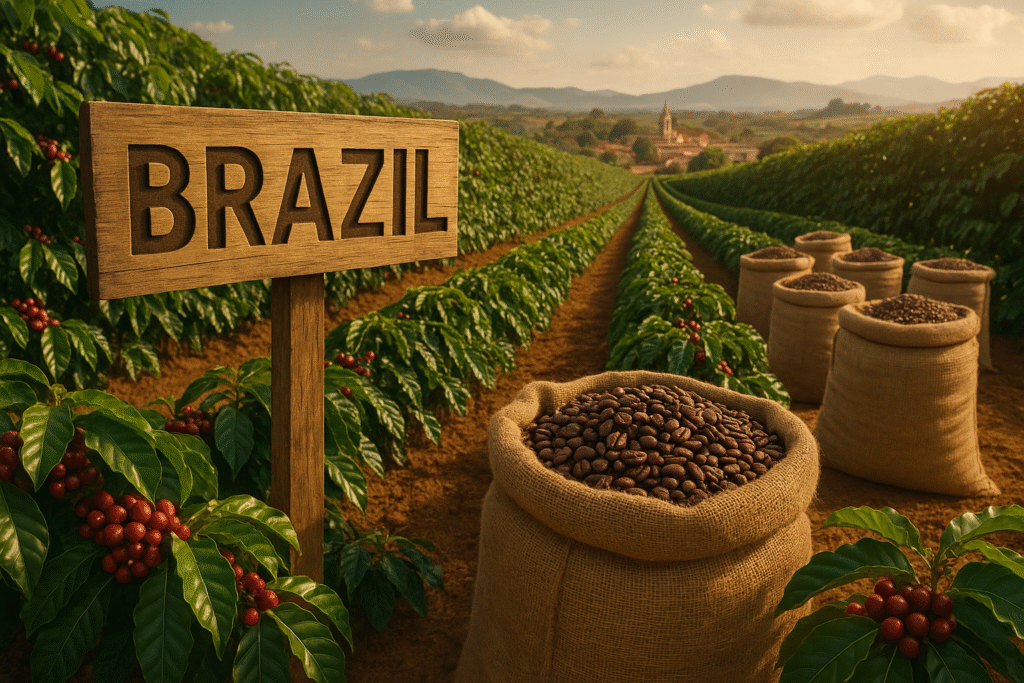
Brewing the story of coffee in Brazil begins with understanding how a single country rose to shape the global market through history, geography, and innovation. Right from the start, the nation built a legacy where Brazilian coffee stands as a symbol of strength and coffee leadership, helping define production standards worldwide while influencing cultures far beyond its borders.
The Origins of Brazil’s Coffee Dominance
Although coffee is not native to Brazil, its journey began in 1727 when seeds were secretly transported from French Guiana. As years passed, cultivation expanded rapidly, and Brazil transformed from a newcomer to a global producer. By the early 1800s, exports increased dramatically, placing the country on a rising economic trajectory driven by coffee.
Historical Evolution of Brazilian Coffee
Brazil’s climb to becoming the largest exporter was marked by several turning points that shaped its success:
- Between 1820 and 1880, plantations grew extensively across São Paulo and Rio de Janeiro
- In 1888, the end of slavery led to a shift in workforce as European immigrants filled labor demands
- Throughout the 20th century, resilience amid international price fluctuations reinforced Brazil’s position
Consequently, each period strengthened Brazil’s identity as a world reference in coffee exports and agricultural innovation.
Why Brazil Is Perfect for Growing Coffee
The country’s natural conditions offer an exceptional environment for cultivation. Its unique combination of climate, geography, and soil explains why Brazil became the center of global production.
Geographic Advantages That Boost Coffee Growth
Brazil’s geographical strengths include:
- Strategic latitude between the Tropic of Capricorn and the Equator
- Ideal altitude ranging from 600 to 1,200 meters
- Balanced climate with well-distributed rainfall
- Fertile, nutrient-rich soils such as those in Cerrado and Sul de Minas
These advantages allow the nation to produce both Arabica and Robusta, expanding its influence and reinforcing the diversity of Brazilian coffee.
The Massive Scale Behind Brazil’s Coffee Output
Meanwhile, what truly elevates Brazil’s coffee power is its extraordinary scale. With more than 300,000 farms, production spans from small family properties to giant industrial operations.
Every year, Brazil delivers over 60 million bags of coffee, supplying international markets like Japan, Germany, Italy, and the United States. This unmatched consistency solidifies its economic impact and strengthens its role as a leader in coffee exports.
Coffee as a Cultural Icon in Brazil
Although numbers define its global influence, coffee also carries deep cultural meaning within the country. The iconic cafézinho symbolizes hospitality, warmth, and everyday connection.
Because of this cultural bond, Brazilian coffee is not only an agricultural product but a national treasure reflected in music, literature, and social traditions. Cultural heritage plays a fundamental role in elevating coffee beyond economics.
Modern Innovations Transforming Brazil’s Coffee Industry
Over time, Brazil became a pioneer in adopting new technologies to increase productivity and quality. These advancements helped the country maintain its global leadership even as international competition grew.
Technological and Sustainable Innovations
Today’s modern innovations include:
- Precision farming with drones and satellite mapping
- Automated harvesting machinery for large plantations
- Sustainable certifications such as UTZ and Rainforest Alliance
- Eco-friendly processing with reduced water consumption
- Professionalization of specialty-grade Brazilian coffee
Furthermore, research institutions continue developing disease-resistant varieties and efficient agricultural practices, ensuring Brazil remains ahead of industry challenges.
The Economic Impact of Brazil’s Coffee Leadership
Although coffee is just one part of the agricultural system, its influence on Brazil’s economy is undeniable. Millions of jobs depend on production, processing, transportation, and export chains. As global prices fluctuate, Brazil’s harvest stability helps balance markets, reinforcing the country’s economic weight in global coffee exports.
This economic significance demonstrates how deeply the crop is integrated into both local communities and international trade.
Challenges Facing Brazil’s Coffee Future
Despite its leadership, Brazil encounters real challenges, mainly driven by environmental and social factors. Climate change presents unpredictable conditions, including droughts and frosts, threatening yields and stability.
Additionally, labor issues and rural migration create new complexities for communities dependent on coffee. Yet, thanks to its strong infrastructure and continuous research, Brazil remains well-positioned to adapt and evolve with new global demands. Future resilience will define the next chapter of Brazilian coffee.
Looking Ahead: The Future of Coffee in Brazil
Although the world of coffee continues to shift, Brazil’s dominance shows no signs of slowing. Investments in innovation, specialty coffee, sustainability, and traceability open new opportunities for expanding its presence in international markets.
As global consumption rises, Brazilian coffee will remain essential to meeting demand, shaping trends, and influencing future production standards.
Final Thoughts: A Legacy Rooted in Coffee
Ultimately, Brazil’s journey from a few smuggled seeds to becoming the world’s coffee superpower illustrates centuries of resilience, adaptation, and passion. Every cup of coffee reminds us of this legacy, built by farmers, workers, and innovators who helped transform Brazil into the biggest global contributor to one of humanity’s most beloved beverages.
So the next time you enjoy a cup of coffee, there’s a good chance you’re tasting a piece of Brazil’s history — a living legacy brewed with dedication, culture, and tradition.