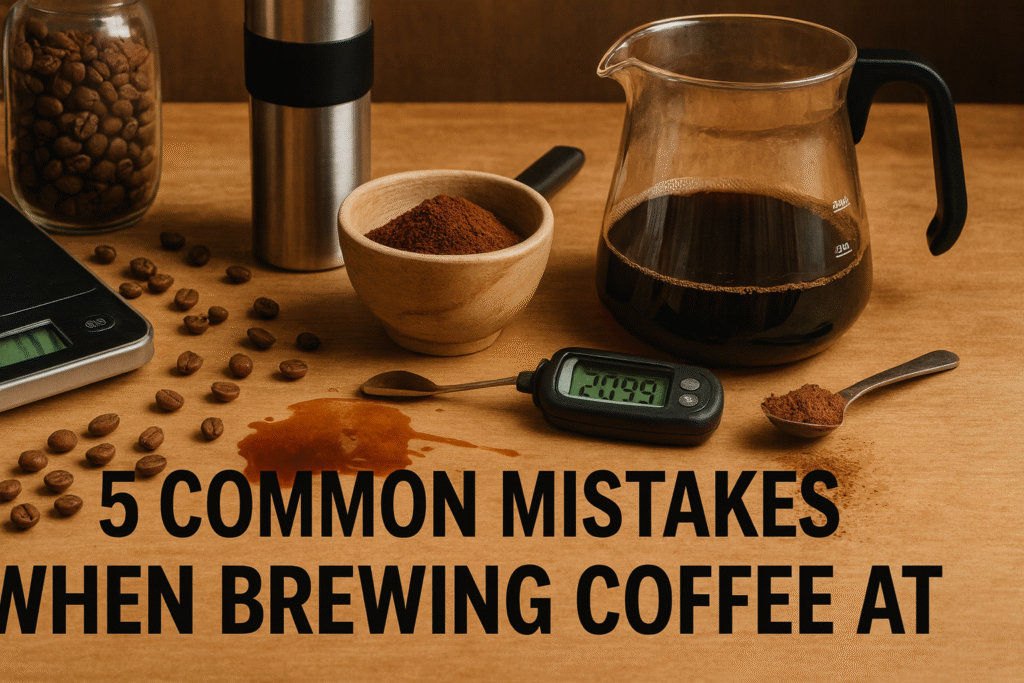
Brewing coffee at home can be incredibly satisfying, yet it becomes even better when you avoid the pitfalls that ruin taste and consistency. While many people invest in premium beans or fancy equipment, overlooked basics often determine whether your cup delivers true excellence. Because of that, understanding how each brewing step affects the flavor of coffee is essential for achieving bold, balanced, and aromatic results. With this in mind, this guide reveals the most frequent errors and shows how you can achieve better coffee brewing every day.
Understanding the Basics Before You Brew
Although home brewing appears simple, your approach greatly influences the final cup. Every choice — from grind size to water quality — impacts the quality of coffee, and even small adjustments can elevate flavor, aroma, and body. As you refine your technique, you’ll notice your brews become more consistent and enjoyable, ultimately leading you to better coffee brewing with less effort.
1. Using the Wrong Water-to-Coffee Ratio
Many home brewers struggle with inconsistent results simply because their measurements are off. Accuracy matters, since too much coffee creates a harsh bitterness while too little produces a flat, lifeless drink. Additionally, guessing ratios makes it nearly impossible to repeat a great cup. Since the correct balance dramatically improves the quality of coffee, switching to precise measurements is essential for better coffee brewing.
The Fix
A digital scale is your best ally. Aim for 1 gram of coffee for every 15–18 grams of water, adjusting to taste preferences. For instance, a 250 ml cup requires roughly 15–17 grams of coffee. Once you adopt consistent ratios, the flavor of coffee becomes richer, cleaner, and far more predictable.
2. Grinding Beans Incorrectly or Too Early
The grind level has a huge influence on extraction, and choosing the wrong size creates uneven, unbalanced brews. Espresso needs a very fine grind, while French press demands a coarse one. When the grind is mismatched to the method, the result is either overly bitter or unpleasantly sour. Moreover, grinding too early leads to oxidation, reducing freshness and harming the quality of coffee you taste in the cup. Paying attention to grind size ensures better coffee brewing every time.
The Fix
Always grind just before brewing and match the grind size to your method:
- Espresso: very fine
- Pour-over: medium-fine
- French press: coarse
- Cold brew: extra coarse
Fresh, method-specific grinding noticeably improves flavor, aroma, and overall density.
3. Brewing With Old or Low-Quality Beans
Because coffee is an agricultural product, it loses freshness and flavor over time. Many people unknowingly use stale beans that have been exposed to air, light, or humidity. When beans age, they lose oils and aromatics that give coffee its depth, lowering the perceived quality of coffee and affecting density, sweetness, and complexity. Improved storage habits instantly contribute to better coffee brewing.
The Fix
Buy freshly roasted beans and check the roast date — not just the expiration date. Select bags with one-way valves, store beans in airtight opaque containers, and keep them away from heat or sunlight. Whenever possible, choose whole beans rather than pre-ground, as they stay fresh significantly longer.
4. Using Water at the Wrong Temperature
Temperature plays a crucial role in the flavor of coffee, and the wrong temperature leads to extraction problems. Water that is too hot results in bitterness, while water that is too cold produces a dull, sour cup. Because brewing involves extracting soluble compounds from coffee, controlling temperature is vital for better coffee brewing that reflects true bean quality.
The Fix
Aim for 90–96°C (195–205°F) for optimal extraction. If you lack a thermometer, allow boiling water to rest for about 30 seconds before pouring. Additionally, avoid distilled or over-filtered water, as minerals are necessary for proper extraction. Use clean tap or spring water to support the natural density and depth of your coffee.
5. Neglecting to Clean Your Equipment
Even when technique is perfect, dirty equipment ruins flavor. Old oils, mineral buildup, and residue accumulate in grinders, brewers, and coffee makers, gradually damaging taste and aroma. Regular cleaning preserves the quality of coffee and ensures consistently better coffee brewing at home.
The Fix
Clean all equipment weekly and rinse thoroughly after each use. Areas to maintain include:
- Grinders (burrs and chambers)
- Pour-over cones and filters
- French press parts
- Espresso machine components
- Water reservoirs and carafes
Simple cleaning solutions, mild soap, or dedicated coffee cleaners make a noticeable difference in flavor clarity.
Final Thoughts: Mastering Home Brewing Through Simple Habits
Perfecting home-brewed coffee doesn’t require expensive upgrades — just greater attention to the fundamentals. By measuring accurately, grinding properly, buying fresh beans, focusing on water temperature, and keeping equipment spotless, you dramatically improve the flavor of coffee and elevate your daily ritual. As your skills develop, these small adjustments transform ordinary brews into café-quality experiences, ensuring better coffee brewing with every cup.