Savoring a cup of coffee is much more than enjoying a warm beverage; it is experiencing the profound influence of the environment behind every bean. How climate shapes flavor is a concept every enthusiast should understand, especially because the climate that nurtures the plant defines the essence of your brew. Coffee lovers who recognize how environment drives taste gain a deeper appreciation for this globally cherished drink.
Understanding Terroir and Its Role in Coffee Flavor
To begin, the idea of terroir—borrowed from the wine world—helps explain why coffees grown in different regions taste remarkably distinct. Climate-driven nuances define terroir through elements such as temperature, rainfall, sunlight, and soil composition, all of which contribute directly to flavor development. While these factors work together, the temperature gradient and soil quality often exert the strongest influence on sweetness, acidity, and aroma.
Temperature as a Determining Force
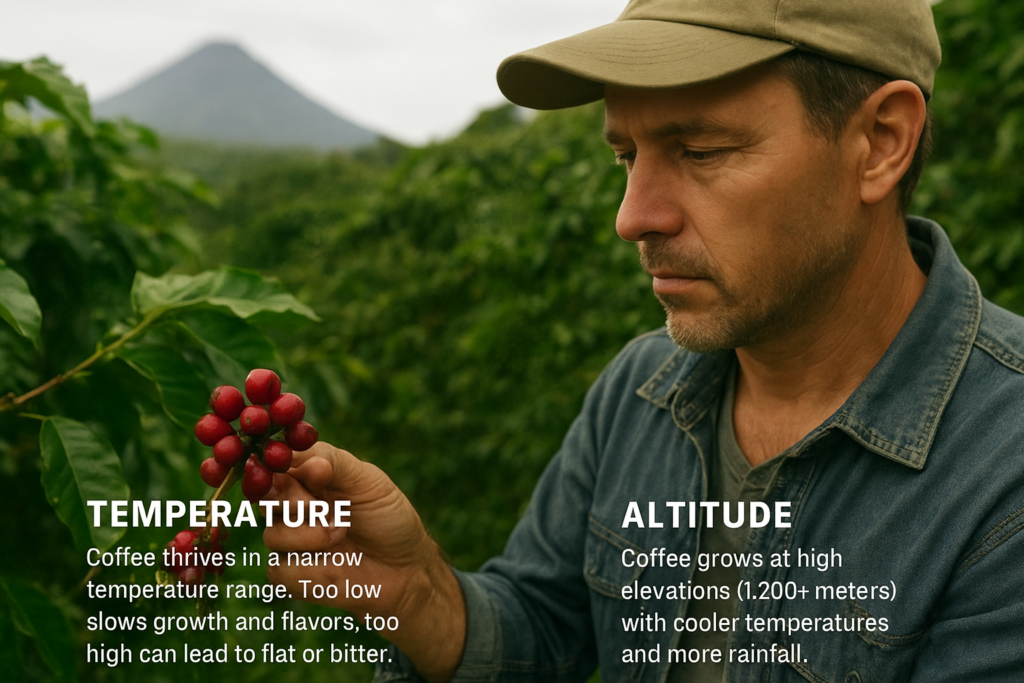
Temperature plays a critical role because coffee thrives only within a specific thermal window. Climate impact becomes evident when temperature varies: too cool, and the cherries ripen slowly; too warm, and they mature too fast. Both extremes affect acidity and complexity. Since the ideal range for Arabica lies between 18°C and 23°C, regions near the equator—such as Ethiopia, Colombia, or Kenya—maintain stable conditions ideal for producing consistently high-quality coffee. This consistent environment enables cherries to develop refined sugars and subtle aromatic notes.
Altitude and How It Shapes Coffee Character
Moreover, altitude is one of the most significant environmental factors defining coffee flavor. Climate altitude effect becomes unmistakable when comparing beans grown at different elevations. Higher altitudes create cooler conditions, slowing cherry maturation and intensifying complexity. Coffees grown above 1,200 meters often feature vibrant acidity, floral undertones, and bright fruit notes. In contrast, beans cultivated at lower elevations tend to lean toward chocolatey, nutty, or earthy profiles. These flavor contrasts show why regions like Yirgacheffe and Antigua are celebrated worldwide.
Rainfall and Its Influence on Coffee Development
Aside from altitude, rainfall is another essential climate variable. Climate rain cycle affects coffee development because the plant needs a balance between rainy and dry periods. Rain triggers flowering cycles and early cherry formation, while dry periods support ripening and harvest readiness. However, unpredictable rainfall—driven increasingly by climate change—can disrupt these cycles. Such irregular patterns lead to inconsistent yields and less predictable flavor profiles, especially in regions reliant on traditional, non-irrigated farming systems.
Sunlight and Bean Density
Furthermore, sunlight profoundly affects coffee bean density and sweetness. Climate sunlight effect guides how efficiently the plant conducts photosynthesis, producing sugars that influence flavor. Shade-grown coffee, particularly in older agroforestry systems, benefits from slower maturation and denser beans known for richer taste. Although direct sunlight helps growth, too much exposure can stress plants, resulting in harsher or flatter flavors. Balance is essential for creating sweetness and complexity in the final cup.
Soil Composition as a Flavor Blueprint
In addition to light, soil composition significantly impacts coffee quality. Climate-soil synergy becomes clear when examining famous coffee-growing regions with volcanic soil, such as Guatemala, Costa Rica, or Indonesia. These nutrient-rich soils offer minerals that enhance acidity, complexity, and aromatic depth. Meanwhile, sandy or dense clay soils may produce milder beans lacking intensity. The relationship between soil composition and climate determines the unique signature of each growing region.
Climate Change and Its Increasing Impact on Coffee
Considering today’s global climate, changes in temperature and weather patterns are reshaping the coffee landscape. Climate threats rising influence production as rising temperatures push farmers to cultivate at higher altitudes, where space is limited. Additionally, pests and diseases—such as coffee leaf rust—are becoming more prevalent, causing significant crop losses. Unpredictable weather, prolonged droughts, and intense rainfall increasingly disrupt flowering cycles and reduce yields. As a result, farmers are adopting adaptive strategies, including shade-grown systems, hybrid coffee varieties, and sustainable agricultural practices.
Adaptation Strategies in Coffee-Growing Regions
At the same time, producers worldwide are exploring innovative ways to protect the future of coffee cultivation. Climate-smart farming solutions include planting climate-resilient varieties, improving soil health, diversifying shading species, and integrating water-conservation technologies. These strategies not only preserve yield but also maintain flavor quality in a warming world. By adopting regenerative agriculture, farmers can help stabilize ecosystems and ensure long-term resilience.
Appreciating Coffee Through the Lens of Climate
Ultimately, recognizing how climate shapes every flavor nuance leads to greater appreciation for the craft behind each cup. Climate flavors revealed highlights that behind every sip are the mountains that provided altitude, the rainfall that nourished the cherries, the sunlight that developed natural sugars, and the soil that gave distinctive character. By understanding these connections, coffee drinkers become more mindful of the environmental forces influencing their favorite brews.
Final Thoughts: A Drink Defined by Nature
Reflecting on how climate affects the flavor of coffee reveals that each cup is an expression of nature itself. Climate creates taste reminds us that coffee is a product of delicate environmental balance—one that demands respect, care, and global awareness. As you enjoy your next cup, consider the climate story carried within its aroma and flavor profile.