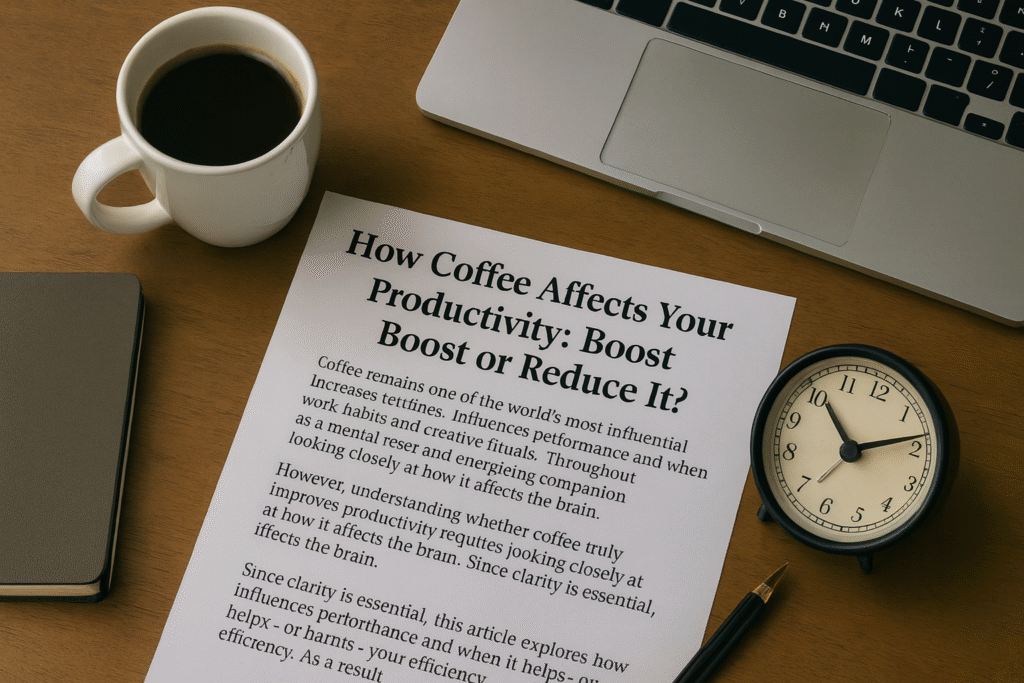
Coffee remains one of the world’s most influential beverages, shaping routines, work habits, and creative rituals. Throughout professional settings and daily life, it serves as a mental reset and energizing companion. However, understanding whether coffee truly improves productivity requires looking closely at how it affects the brain. Since clarity is essential, this article explains how caffeine influences performance and when it helps—or harms—your efficiency. As a result, every section highlights the impact of coffee on productivity using the focus phrase “boost productivity” to guide the narrative clearly.
How Coffee Interacts With Your Brain
Coffee’s stimulating effect comes primarily from caffeine, a natural compound that alters how the brain processes fatigue signals. After entering the bloodstream, caffeine blocks adenosine, a neurotransmitter that promotes tiredness. Consequently, this increases energy levels and supports sharper thinking. Because mental clarity is essential in daily tasks, coffee’s influence can genuinely boost productivity, especially during demanding cognitive activities.
Key Effects on the Brain
- Reduced fatigue
- Enhanced focus
- Increased dopamine and adrenaline
- Improved concentration
These neurological benefits explain why workplace culture often embraces coffee as a reliable source of alertness.
Benefits of Coffee for Productivity
Improved Focus and Attention
Focus-driven tasks demand sustained mental energy, and caffeine helps support that endurance. With heightened concentration, complex assignments become more manageable. Therefore, drinking coffee before analytical or precision-based work can effectively boost productivity, especially during long meetings, writing sessions, or technical problem-solving.
Sharper Short-Term Memory
Several studies show caffeine’s influence on short-term memory retrieval and reaction time. Through this enhancement, individuals can perform better on tasks that require quick decisions or rapid information processing. Thus, thoughtful use of coffee can naturally boost productivity during high-pressure situations.
Increased Motivation and Energy
Dopamine stimulation from caffeine often leads to improved mood and motivation. This uplift becomes valuable when facing repetitive or monotonous responsibilities. As motivation strengthens, coffee can meaningfully boost productivity by making tasks feel less draining and more achievable.
Potential Creative Support
Creativity doesn’t always follow a formula, but improved alertness can help spark flow states. While coffee itself isn’t a direct creativity enhancer, its energizing qualities can indirectly inspire new ideas. In those moments, it may gently boost productivity by improving mental clarity.
When Coffee Reduces Productivity
Negative Effects of Excessive Caffeine
Too much caffeine introduces a different outcome. Overconsumption may cause:
- Jitters or nervousness
- Restlessness
- Difficulty focusing due to overstimulation
- Irritability
- Headaches
These symptoms often hinder performance, and instead of helping, coffee may disrupt workflow rather than boost productivity.
Impact on Sleep Quality
Drinking coffee later in the day can interfere with deep sleep cycles. Even if falling asleep seems easy, caffeine reduces restorative rest, creating an exhausting loop of tired mornings and stronger caffeine dependence. Without proper sleep, neither energy nor creativity thrives, making it impossible for coffee to boost productivity.
Dependency and Withdrawal
Consistent high consumption may lead to dependency, and missing a usual dose can trigger withdrawal. Symptoms like fatigue, reduced motivation, and mental fog negatively affect daily performance. Consequently, relying solely on coffee prevents it from consistently supporting or boosting productivity.
Ideal Coffee Consumption for Better Performance
For most adults, up to 400 mg of caffeine—around 3 to 4 cups of brewed coffee—is considered safe. Sensitivity varies, but moderation generally maximizes benefits without overwhelming the nervous system. By understanding personal limits, individuals can use coffee intentionally to boost productivity without risking negative effects.
Factors That Influence Caffeine Sensitivity
- Body weight
- Metabolism
- Tolerance level
- Dietary habits
- Stress levels
Avoiding coffee after early afternoon helps protect sleep quality while maintaining balanced energy.
How to Make Coffee Work for You
Building mindful habits can help maximize the advantages of coffee while minimizing drawbacks:
- Drink water before your first cup
- Avoid consuming it on an empty stomach
- Use coffee breaks strategically during natural energy dips
- Skip heavily sugared coffee drinks
- Take occasional caffeine-free days
These small adjustments allow coffee to genuinely boost productivity without overwhelming your system.
Effective Alternatives for Focus and Energy
Coffee isn’t the only option. For those reducing caffeine intake, alternatives include:
- Green tea or matcha
- Short power naps
- Light stretching or movement
- Breathing exercises
- Sunlight exposure
Such strategies provide balanced stimulation without the intensity of stronger caffeine doses.
Final Thoughts: Coffee as a Strategic Tool
Coffee can be an incredible ally when used with awareness and intention. Its ability to increase focus, motivation, and cognitive clarity can certainly boost productivity across many tasks. However, moderation is essential. Excessive consumption, poor sleep, and dependency reduce its benefits and may even impair performance. By listening to your body and timing your intake wisely, you can allow coffee to support—not control—your productivity.