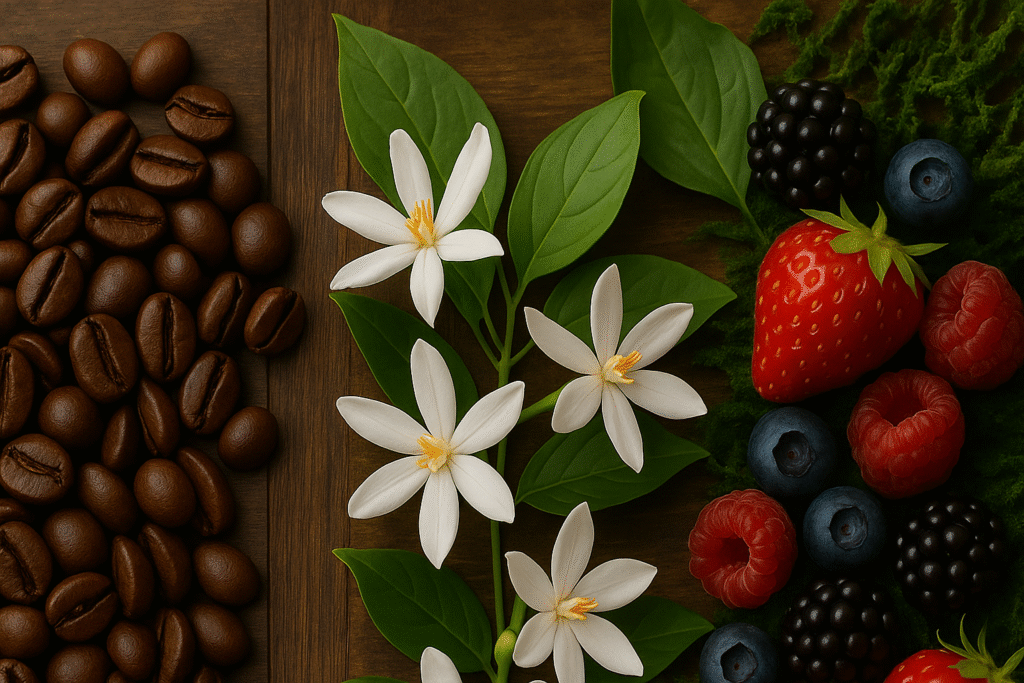
Understanding the aroma of specialty coffee is one of the most powerful skills a coffee lover can develop. Aroma is more than a pleasant scent—it’s the gateway to flavor, quality, and origin. In fact, much of what we think of as “taste” actually comes from smell. In this guide, you’ll learn how to identify the aromatic characteristics of specialty coffee, what scents to look for, and how to train your senses like a professional cupper.
Why Aroma Matters in Specialty Coffee
Aroma plays a crucial role in shaping the flavor experience of specialty coffee. As hot water releases volatile compounds from freshly ground or brewed coffee, your nose becomes the first tool for evaluation. These aromas help determine freshness, roasting quality, and even the bean’s origin.
Aroma reveals:
- Freshness and roast accuracy
- Coffee origin and variety
- Processing method
- Flavor complexity and clarity
- Sensory cues before your first sip
In professional tastings, aroma is one of the primary attributes evaluated by Q Graders, roasters, and sensory experts.
Aroma vs. Fragrance: What’s the Difference?
Coffee professionals distinguish between two related but different sensory stages:
Fragrance
The scent of dry, freshly ground coffee before brewing.
Aroma
The scent released during brewing and after water is added.
Both stages reveal important clues about quality. Specialty coffee typically shows expressive, clean, identifiable aromas in both fragrance and aroma.
Common Aromas Found in Specialty Coffee
Over 800 aromatic compounds exist in roasted coffee, creating an incredibly diverse sensory experience. While you don’t need to memorize all of them, knowing common aroma families helps you identify them more confidently.
1. Fruity Aromas
Often found in African coffees and high-altitude varieties.
Possible notes:
- Blueberry, raspberry, strawberry
- Lemon, orange, grapefruit
- Peach, apricot, cherry
- Pineapple, mango, papaya
2. Floral Aromas
Common in Ethiopian heirloom varieties.
Notable notes:
- Jasmine
- Rose
- Lavender
- Honeysuckle
3. Nutty and Chocolatey Aromas
Typical in coffees from Brazil, Colombia, and Guatemala.
Examples:
- Almond
- Hazelnut
- Cocoa
- Milk or dark chocolate
4. Spicy and Herbal Aromas
More common in Indonesian coffees or naturally processed beans.
Notes:
- Cinnamon
- Clove
- Mint
- Black tea
5. Sweet Aromas
Created during roasting through the Maillard reaction.
Examples:
- Brown sugar
- Caramel
- Honey
- Vanilla
6. Roasted or Smoky Aromas
Stronger in darker roasts.
Notes may include:
- Toast
- Burnt sugar
- Tobacco
- Charcoal
High-quality specialty coffee should not have unpleasant aromas such as mold, rubber, or mustiness—these indicate defects.
How to Smell Coffee Like a Professional
Identifying coffee aromas