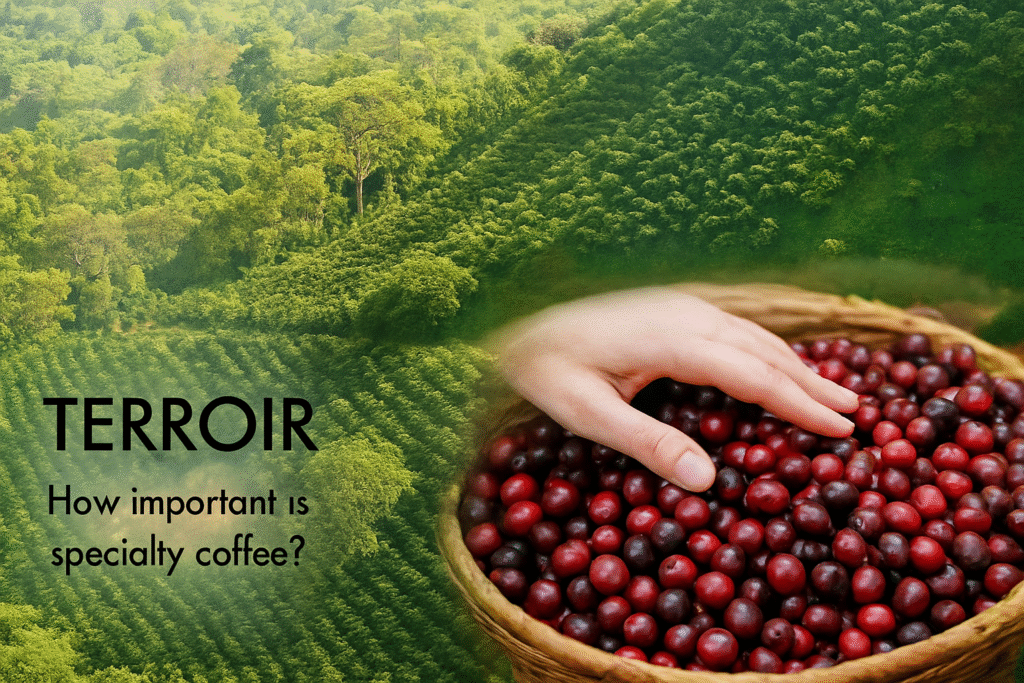
Understanding terroir in specialty coffee is essential for anyone who wants to appreciate why coffees from different regions taste so distinct. This article explores how terroir in specialty coffee shapes flavor, aroma, and quality—making it one of the most influential factors behind every cup you brew. Whether you’re a curious coffee lover or a dedicated home barista, learning about terroir unlocks a deeper connection to the origins of your favorite beans.
What Is Terroir in Specialty Coffee?
Many people think terroir simply refers to “where the coffee comes from,” but the meaning goes far beyond geography. Terroir describes the unique environmental conditions that affect how coffee grows, developing characteristics that cannot be replicated elsewhere. These factors include:
- Altitude
- Climate (temperature, humidity, rainfall)
- Soil composition and nutrients
- Sunlight exposure
- Microclimate and local biodiversity
- Farming practices and ecosystem health
Together, they create a natural fingerprint—one that gives each farm, region, and country its own sensory identity. Even two farms located side by side can produce coffees with remarkably different profiles due to subtle variations in terroir.
How Terroir Shapes the Flavor of Coffee
Terroir influences every stage of coffee development, from how the cherry matures to how dense and sweet the bean becomes. These environmental conditions directly impact flavor, acidity, sweetness, aroma, and body in the final cup.
Altitude
Higher elevations produce slower-maturing cherries, allowing sugars to develop more fully. This often results in:
- Brighter acidity
- Floral or citrus notes
- More complex flavor structures
Soil
Volcanic or mineral-rich soils, found in places like Guatemala, Hawaii, and parts of Colombia, often contribute to coffees with:
- Earthy depth
- Spicy undertones
- Full-bodied richness
Climate
Dry climates may yield sweeter, denser beans, while rainforest regions—such as Ethiopia—often produce coffees with lively fruit notes like berry, melon, or citrus.
In short, you can taste the altitude, soil, and climate. Terroir does not just influence flavor—it defines it.
Why Terroir Matters in Specialty Coffee
For many coffee professionals, terroir is the foundation of quality. In the world of specialty coffee, it provides a narrative that connects flavor with place, culture, and farming tradition.
Understanding terroir helps roasters:
- Select beans that match desired flavor profiles
- Highlight the characteristics of each origin through roasting
- Share meaningful sourcing stories with consumers
For drinkers, terroir turns coffee into a sensory journey. Instead of simply choosing “a strong coffee,” you learn to differentiate between regions, varieties, and processing styles—similar to wine enthusiasts exploring vintages and terroirs.
Examples of Terroir Across Coffee-Growing Regions
Ethiopia
- High elevations, ancient heirloom varieties, diverse microclimates
- Washed and natural processing methods
- Flavor profile: jasmine, blueberry, bergamot, floral acidity
Brazil
- Lower altitudes, large farms, mechanical harvesting
- Natural and pulped-natural processing
- Flavor profile: chocolate, nuts, low acidity, creamy body
Colombia
- Mountainous terrain, volcanic soil, stable climate
- Primarily washed process
- Flavor profile: balanced acidity, caramel, citrus, medium body
Kenya
- High altitudes, red volcanic soils
- Washed process, SL28 and SL34 varieties
- Flavor profile: blackcurrant, winey acidity, juicy mouthfeel
Each origin is shaped by terroir—and no two terroirs are ever exactly alike.
Terroir vs. Variety vs. Processing: What Matters Most?
Coffee flavor comes from a combination of factors, and none works alone.
- Variety provides the genetic potential.
- Processing (washed, natural, honey) shapes how flavors develop after harvest.
- Roasting balances and highlights the coffee’s characteristics.
- Terroir, however, sets the foundation—the natural environment where flavor begins.
Think of it like cooking: variety is the ingredient, processing is the technique, roasting is the seasoning, but terroir is the origin of the flavor itself.
How to Taste Terroir at Home
You don’t need to be a professional cupper to identify terroir. With the right approach, anyone can learn to detect regional characteristics.
1. Choose Single-Origin Coffees
Look for coffees labeled with origin, altitude, variety, and processing. These details help you connect sensory notes with terroir.
2. Smell the Dry Grounds
Before brewing, inhale the fragrance. Dry aromas reveal hints of sweetness, fruit, florals, or nuttiness.
3. Brew Consistently
Use a steady method—like pour-over, AeroPress, or French press—so you can compare coffees more accurately.
4. Take Notes
Focus on:
- Acidity (bright, smooth, sharp?)
- Sweetness (honey-like, fruity, caramel?)
- Body (light, silky, heavy?)
- Flavor notes (berries, chocolate, spice, herbs?)
5. Compare Coffees Side by Side
A Kenyan next to a Brazilian will highlight how dramatically terroir shapes the sensory experience.
Final Thoughts: The Meaning of Terroir in Specialty Coffee
Terroir elevates coffee from an everyday beverage to a global story of landscapes, farmers, and natural diversity. It explains why one cup tastes like citrus and jasmine, and another tastes like chocolate and roasted nuts. Understanding terroir in specialty coffee deepens your appreciation for each sip and allows you to explore the world through your cup.
So the next time you drink coffee, pause for a moment and ask: What story is this terroir telling me?
In specialty coffee, flavor truly begins at the farm.