In the global coffee scene, few comparisons generate as much curiosity as Arabica vs Robusta, and key differences help explain why these two coffee beans deliver such distinct experiences. While both belong to the Coffea family, Arabica and Robusta coffee differ significantly in flavor, growing conditions, caffeine levels, and overall quality perception, shaping how coffee lovers choose their favorite cup.
The Origins of Arabica and Robusta Coffee
Understanding Arabica vs Robusta begins with their origins, and key differences are rooted in geography and history. Coffea Arabica was first discovered in the highlands of Ethiopia and has been cultivated for over a thousand years, making it the oldest known coffee species. Today, Arabica coffee accounts for approximately 60–70% of global coffee production.
By contrast, Coffea Canephora, commonly known as Robusta coffee, originated in central and western sub-Saharan Africa and was identified much later. Due to its resilience and adaptability, Robusta spread quickly and became essential for large-scale production.
Growing Conditions and Cultivation
When comparing Arabica vs Robusta, growing conditions reveal clear contrasts, and key differences influence both quality and cost. Arabica coffee thrives in cooler, subtropical climates and is typically grown at elevations between 600 and 2,000 meters. These conditions require careful monitoring, making Arabica more sensitive to pests and climate changes.
On the other hand, Robusta coffee grows well at lower altitudes, usually between 200 and 800 meters, and tolerates higher temperatures and humidity. Its natural resistance to diseases allows for easier cultivation and higher yields, making Robusta more economical for producers.
Flavor Profile: Smooth vs Bold
Flavor is where Arabica vs Robusta becomes most noticeable, and key differences directly affect consumer preference. Arabica beans are known for a smoother, sweeter taste, often featuring notes of fruit, sugar, berries, or floral undertones. Their higher acidity creates a bright, refined flavor profile that appeals to specialty coffee drinkers.
In contrast, Robusta beans deliver a stronger, more intense flavor, frequently described as earthy, woody, or bitter. With heavier body and grainy or nutty notes, Robusta coffee feels bolder on the palate and is commonly used in espresso blends.
Caffeine Content and Strength
Another major factor in Arabica vs Robusta is caffeine concentration, and key differences significantly impact taste and effect. Robusta coffee contains approximately 2.2–2.7% caffeine, nearly double that of Arabica. Arabica beans, by comparison, contain about 1.2–1.5% caffeine.
This higher caffeine level not only contributes to Robusta’s bitterness but also acts as a natural pesticide, making the plant more resistant to insects. For those seeking a stronger caffeine boost, Robusta-based coffees often provide greater stimulation.
Physical and Visual Differences
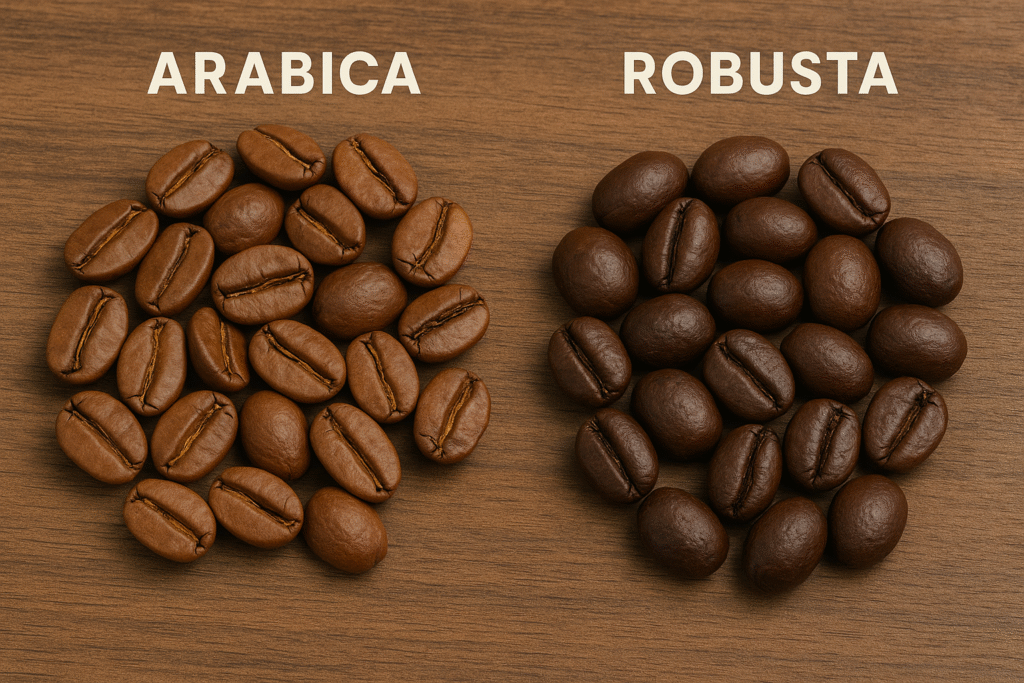
Beyond taste, Arabica vs Robusta can also be distinguished visually, and key differences are noticeable to trained eyes. Arabica beans are oval-shaped with a curved center crease, while Robusta beans are rounder with a straight crease.
Additionally, roasted Robusta beans tend to appear darker and oilier than Arabica beans. These physical traits further reinforce the contrast between the two coffee varieties.
Pricing and Market Position
Market value is another area where Arabica vs Robusta diverges, and key differences reflect production complexity. Due to its delicate growing requirements and lower yield, Arabica coffee is generally more expensive and commonly used in specialty coffee and premium blends.
Conversely, Robusta coffee is more affordable and widely used in instant coffee, commercial blends, and espresso preparations where strong flavor and crema are desired. Its lower cost makes it attractive for mass-market consumption.
Health Benefits of Arabica and Robusta
When evaluating Arabica vs Robusta, health considerations also matter, and key differences may influence consumption choices. Arabica coffee, with lower caffeine content, can be gentler on sensitive stomachs and reduce the likelihood of jitters.
Meanwhile, Robusta coffee offers higher caffeine levels that may enhance alertness and concentration. Some studies also associate caffeine with mild antibacterial properties. Regardless of type, moderate coffee consumption has been linked to potential benefits such as reduced risk of type 2 diabetes and neurodegenerative diseases.
Which Coffee Bean Is Better?
Determining the winner in Arabica vs Robusta depends on personal preference, and key differences guide individual choices. Arabica coffee is ideal for those who appreciate smooth texture, complex aromas, and balanced acidity.
Alternatively, Robusta coffee suits drinkers who enjoy bold intensity, higher caffeine, and a more affordable option. Many coffee enthusiasts prefer blends that combine Arabica’s sweetness with Robusta’s strength and crema, offering a balanced experience.
Final Thoughts on Arabica vs Robusta
Ultimately, Arabica vs Robusta is not about superiority but preference, and key differences enrich global coffee culture. Both beans play essential roles in the industry and cater to different tastes, brewing methods, and lifestyles.
Exploring each type individually—or side by side—can deepen appreciation for coffee and help consumers make informed decisions based on flavor, caffeine needs, and budget. Understanding Arabica and Robusta coffee transforms everyday drinking into a more intentional and rewarding experience.