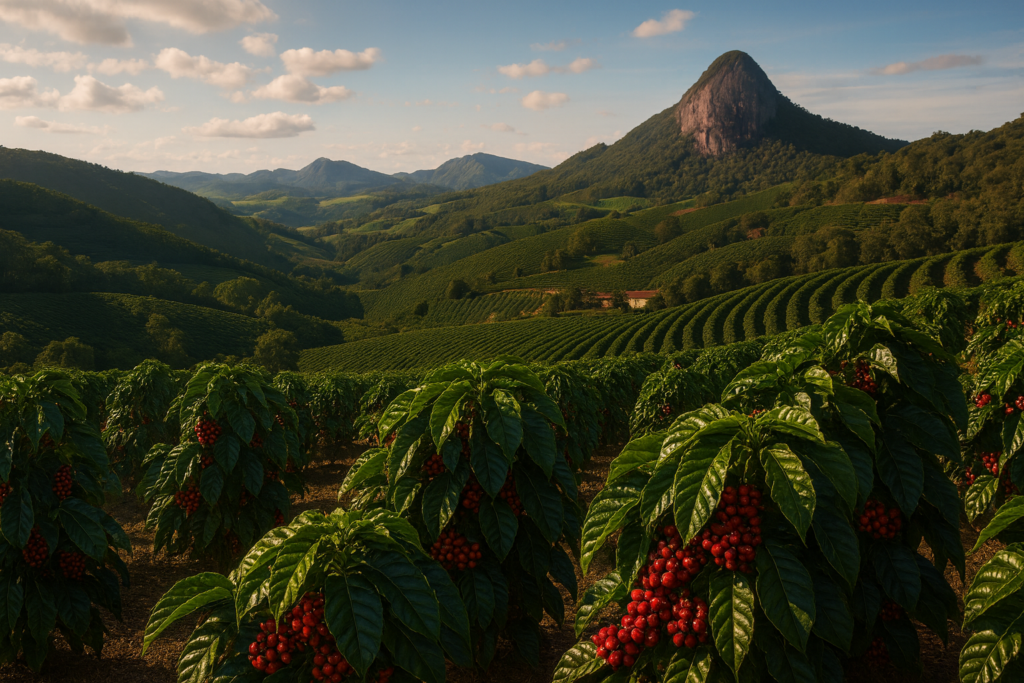
Brewing and understanding the best coffee-growing regions in Brazil has become more than a simple curiosity; it is a journey into terroir, culture, and craftsmanship. Right from the start, recognizing how Brazil’s landscapes shape its beans highlights the uniqueness of this origin and transforms each sip into bold Brazilian coffee, an experience deeply tied to geography and tradition.
Why Brazil Is Ideal for Coffee Cultivation
Brazil’s reputation as a global coffee leader is no coincidence. Its territory offers a rare combination of climate, elevation, and soil quality that naturally supports Brazilian coffee excellence. Additionally, the country benefits from centuries of agricultural development, which contributes to both volume and quality. Moreover, the harmonious balance of tropical and subtropical weather patterns nurtures coffee plants with consistency throughout the growing season. Because of these ideal conditions, Brazil remains unmatched in its ability to produce both specialty-grade and commercial coffee at scale, always reflecting bold Brazilian coffee diversity.
Minas Gerais: The Heart of Brazilian Coffee
A Region Built for Excellence
Minas Gerais dominates the nation’s coffee output, offering microclimates that are perfectly aligned with specialty production. Through its rolling mountains and rich soils, Minas creates an environment where Brazilian coffee thrives with remarkable balance, sweetness, and clarity. Furthermore, its producers are known for adopting advanced methods while preserving long-standing traditions, ensuring steady quality year-round. This coexistence of innovation and heritage continually reinforces the identity of bold Brazilian coffee from Minas.
What Makes Minas Special
- Famous Sub-Regions: Sul de Minas, Chapada de Minas, Cerrado Mineiro
- Flavor Profile: Chocolate, nuts, caramel sweetness, medium acidity
- Altitude: 800–1,400 meters
Cerrado Mineiro was the first Brazilian region to receive a Designation of Origin, highlighting its distinctive terroir and commitment to farm traceability. Because of this certification, consistency and authenticity are guaranteed in every cup.
São Paulo: Tradition and Balance in Mogiana
Situated along the border with Minas Gerais, Mogiana is known for producing some of the smoothest and most balanced Brazilian coffee available. Thanks to its mild climate and rolling terrain, the region fosters slow cherry development, which enhances sweetness. Additionally, São Paulo’s long history of coffee cultivation ensures that expertise has been passed down through generations, resulting in predictably harmonious flavors. Ultimately, Mogiana coffee is celebrated worldwide for its dependable expression of bold Brazilian coffee.
Regional Highlights
- Flavor Profile: Sweet, full-bodied, chocolate and caramel undertones
- Altitude: 800–1,100 meters
Because of its balance and consistency, Mogiana beans are frequently used in premium espresso blends around the globe.
Espírito Santo: Diversity in Every Cup
Espírito Santo brings a different dimension to Brazilian coffee, producing exceptional Arabica in its highlands and robust, full-bodied Conilon (Robusta) in its lower-altitude areas. Its mountainous microclimates create vibrant acidity and floral notes, making its Arabicas increasingly recognized in specialty competitions. Furthermore, many producers here rely on artisanal drying patios and innovative fermentation techniques, adding unique layers to the final cup. Consequently, Espírito Santo continues to rise as a source of bold Brazilian coffee with distinctive character.
What Defines Espírito Santo
- Flavor Profile: Fruity, bright acidity (Arabica); bold, earthy (Robusta)
- Altitude: 700–1,200 meters
Its combination of traditional farming and experimental methods places Espírito Santo among Brazil’s most exciting coffee frontiers.
Bahia: Innovation and High-Quality Farming
Bahia has quickly grown into one of the most technologically advanced Brazilian coffee regions. With controlled irrigation systems, ideal sunlight, and elevated terrain, the region consistently produces refined, complex coffees. Moreover, Bahia’s producers frequently adopt modern agricultural science, improving both productivity and cup quality. This innovative approach ensures Bahia remains a rising star with a clear identity tied to bold Brazilian coffee excellence.
Regional Characteristics
- Famous Sub-Regions: Chapada Diamantina, Planalto da Bahia
- Flavor Profile: Citrus, floral notes, bright acidity
- Altitude: 850–1,300 meters
Bahia coffees are prized for their elegance, clarity, and expressive flavor profiles.
Paraná: A Resilient Part of Brazilian Coffee History
Though production has decreased due to past frosts, Paraná remains culturally significant in Brazil’s coffee story. Its beans tend to be sweet, mild, and clean—frequently used in blends that require stability and smoothness. Besides its legacy, renewed investment in specialty cultivation is gradually repositioning Paraná as a small yet meaningful contributor to Brazilian coffee identity. Consequently, the region retains a symbolic place in the evolution of bold Brazilian coffee.
Regional Traits
- Flavor Profile: Mild, sweet, balanced
- Altitude: Around 800 meters
Producers in Paraná are now focusing on specialty-grade lots, aiming to revive its historical importance.
What Makes Brazilian Coffee Truly Unique
Brazil stands out not only for volume but also for the variety of flavors and processing methods found across its regions. Its natural and pulped natural processing methods yield sweet, full-bodied coffees that are globally recognized. Additionally, the country cultivates numerous varieties such as Bourbon, Catuaí, Mundo Novo, and Yellow Bourbon, each contributing unique sensory qualities. Ultimately, Brazil’s consistency and diversity make it a cornerstone in blends and single-origins worldwide, reinforcing its position as the home of bold Brazilian coffee.
Final Thoughts: Exploring Brazilian Coffee Through Its Regions
Discovering the best coffee-growing regions in Brazil is like traveling across an entire sensory landscape. From Minas Gerais’ chocolatey richness to Bahia’s floral brightness, each region showcases how climate, soil, and tradition combine to create exceptional coffee. As you explore these origins through single-origin offerings, you experience not just flavor but geography, heritage, and the soul of Brazilian coffee itself.